
The most controversial law change in the history of international sport will force all match officials to identify as non-binary.
The world’s major sporting bodies reached the contentious decision after years of heated discussions, and stated that the new law will make all sports fairer.
“All match officials in elite sporting competitions must identify as non-binary because they do not identify with any specific team and are therefore more likely to adjudicate competitions without bias,” stated a joint announcement from the governing bodies.
The law change will be implemented primarily in team sports and will be introduced at senior elite level for referees and umpires.
“Impartial adjudication of competition is central to the integrity of any sport at any level,” continued the announcement.
“Impartiality is even more important in the age of professionalism, in which an error on behalf of a match official could cost a team thousands or millions of dollars.”
Officials will be required to declare their identity and pronouns at the beginning of every season in order to maintain their accreditation, and must not change their identity during the season (nor even at half-time).
Video match officials will also be non-binary, as the modern era allows them to watch games not in black and white but in all the colours of the rainbow.
Governing bodies explained the law will have yet another benefit.
“Non-binary people prefer to be referred to as ‘they’. In English, ‘they’ implies plural, or two or more people. Thus, athletes hearing ‘they’ will feel like there is more than one match official, and more than one set of eyes watching them – and they will be less likely to break the rules.”
The law can apparently trace its creation to Australian slang.
Aussies have always said that a non-heteronormative person “bats for the other side”, in a reference to cricket, while a non-binary person can be said to bat for no side.
When the new law takes effect, all referees and umpires will be clad in the colours of the LGBT+ flag, even in countries with cultural or religious opposition to non-heteronormative identification or relationships.
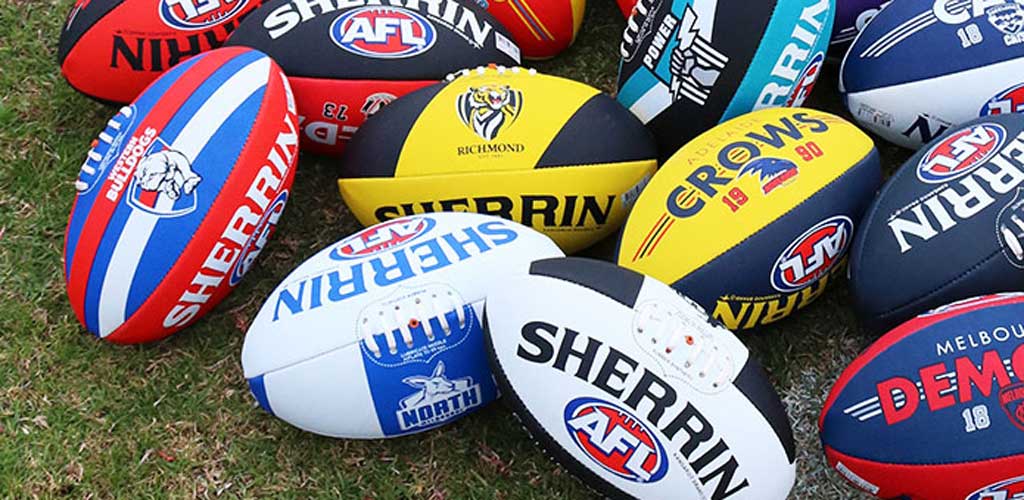
Image: http://www.sherrin.com.au
 kieranblakewriter